
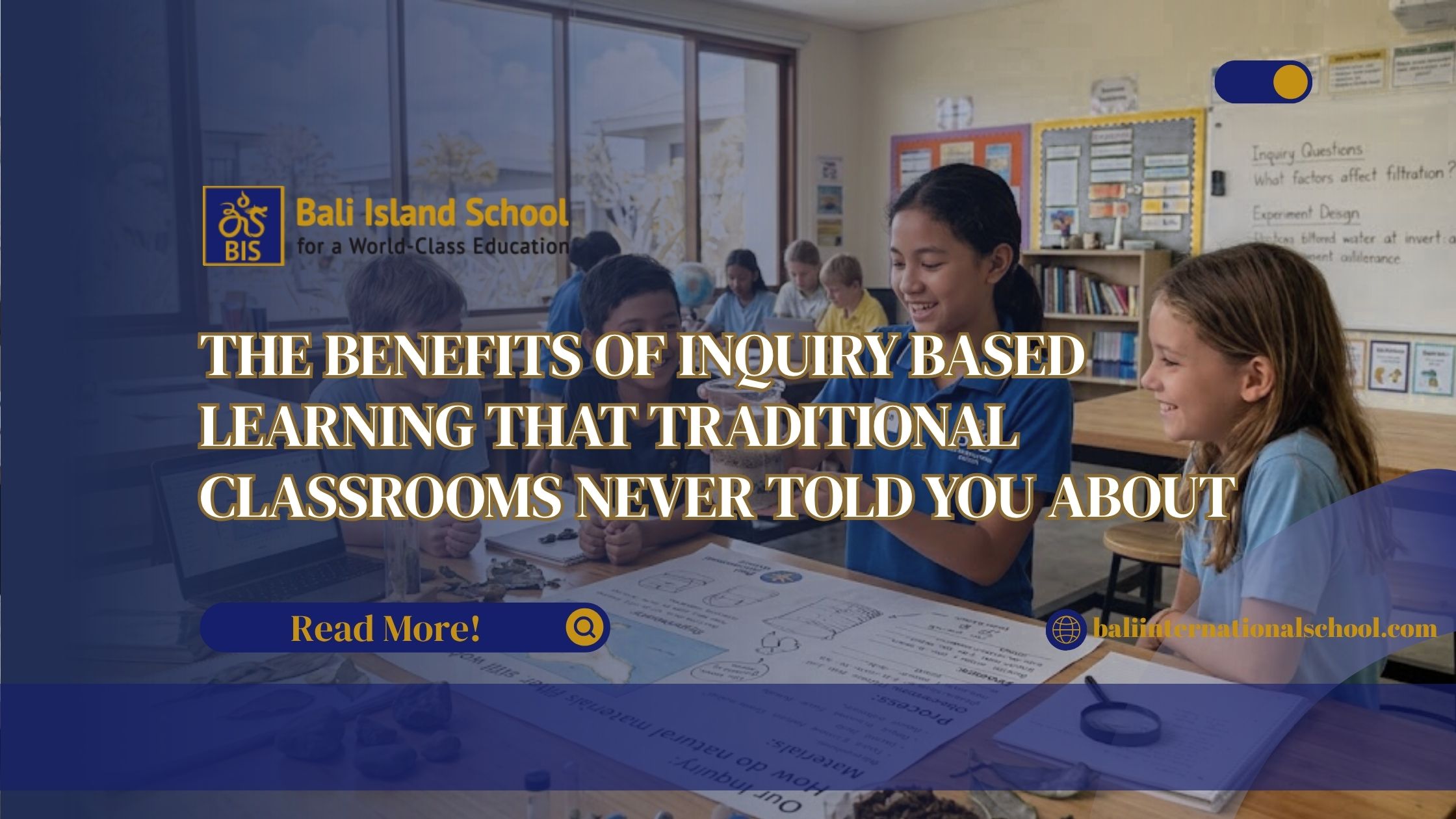
What if the most valuable lesson your child learns at school is not an answer, but how to find one? The benefits of inquiry based learning go beyond academic knowledge by encouraging students to ask questions, investigate ideas, and develop their own understanding of the world.
This approach changes the learning experience from passively receiving information into actively discovering how knowledge connects to everyday life.
For parents exploring international education, understanding this teaching philosophy can reveal why some classrooms look very different from the traditional lessons they remember.
Instead of focusing exclusively on memorisation, inquiry-based classrooms encourage curiosity, discussion, experimentation, and reflection. At Bali Island School (BIS), this approach forms an important part of the International Baccalaureate (IB) educational framework, helping students develop the skills and attitudes needed for lifelong learning.
What Is Inquiry-Based Learning and Why Does It Matter?
Inquiry-based learning is an educational approach that encourages students to explore questions, investigate evidence, and construct understanding through guided experiences. Teachers remain essential to the process, providing explanations, resources, feedback, and direction when learners need support.
In a traditional lesson, students might begin by receiving information before completing exercises to demonstrate what they have learned. An inquiry-based lesson can begin with a question or problem that encourages students to investigate the topic, connect existing knowledge with new information, and explain their conclusions.
This does not mean that direct instruction, textbooks, or factual knowledge become unnecessary. Instead, inquiry provides opportunities for students to use what they learn, understand why it matters, and develop the confidence to investigate unfamiliar challenges.
Read Other Interesting Articles: Why Every Smart Parent Is Rethinking International School Bali Right Now
Six Benefits of Inquiry Based Learning Every Parent Should Understand
Understanding the educational value of inquiry can help you evaluate how a school supports children’s academic progress and personal development. Here are six important benefits to consider when exploring an inquiry-oriented learning environment.
1. It Develops Critical Thinking and Reasoning Skills
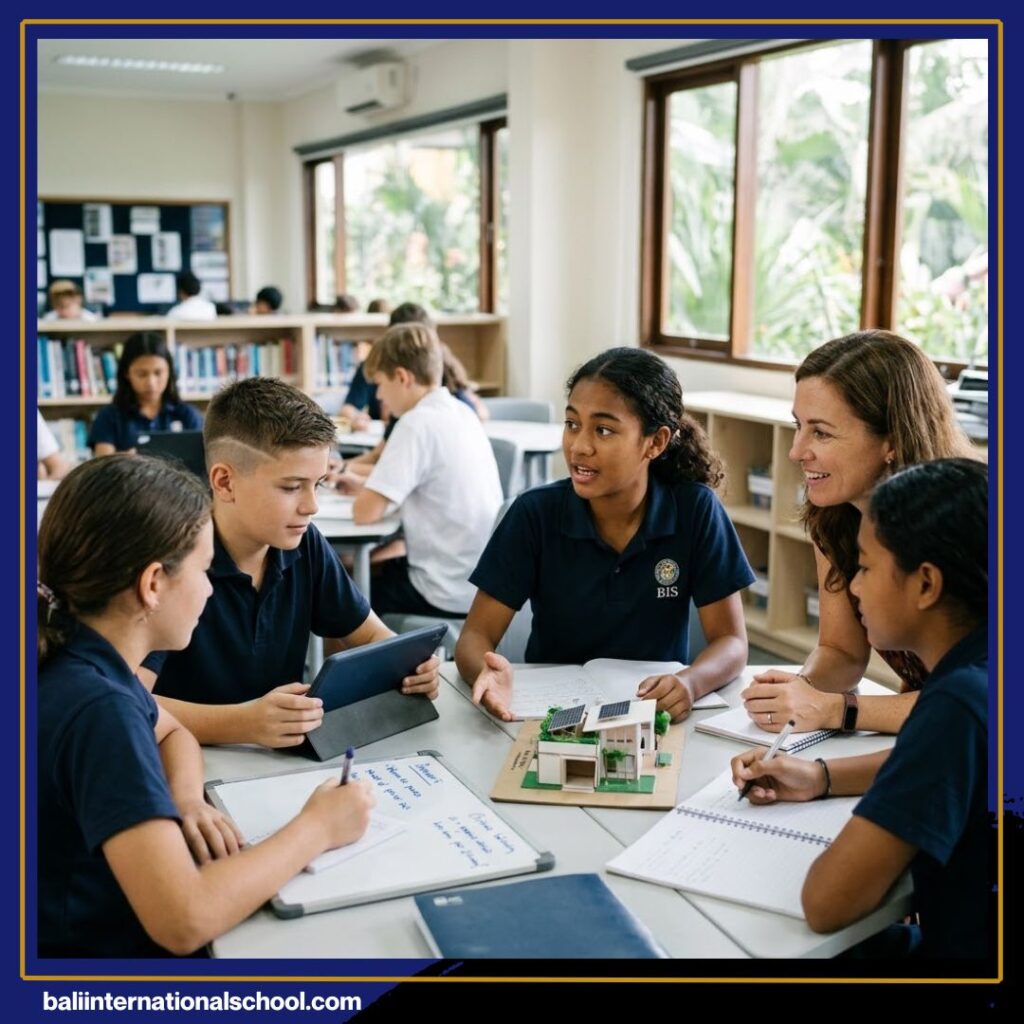
Critical thinking begins when children learn to question information, examine evidence, and consider whether an explanation makes sense. Inquiry-based learning encourages these habits by giving students opportunities to investigate problems rather than immediately accepting the first answer they encounter. Over time, they can become more comfortable explaining their reasoning and reconsidering their conclusions when new evidence appears.
For example, students investigating why certain plants grow better in particular conditions might compare sunlight, water, and soil. They can record observations, discuss possible explanations, and identify which evidence supports their conclusions. This process helps connect scientific knowledge with the reasoning skills needed to investigate other subjects.
The same habits can be useful when students evaluate information online, compare different viewpoints, or make decisions about everyday situations. Instead of relying entirely on someone else’s interpretation, they learn to consider evidence and explain their thinking. These skills become particularly valuable as students encounter increasingly complex academic work.
Skills students can practise include:
- Comparing information from different sources.
- Identifying patterns and evaluating evidence.
- Explaining conclusions using logical reasoning.
2. It Encourages Curiosity and a Love of Learning
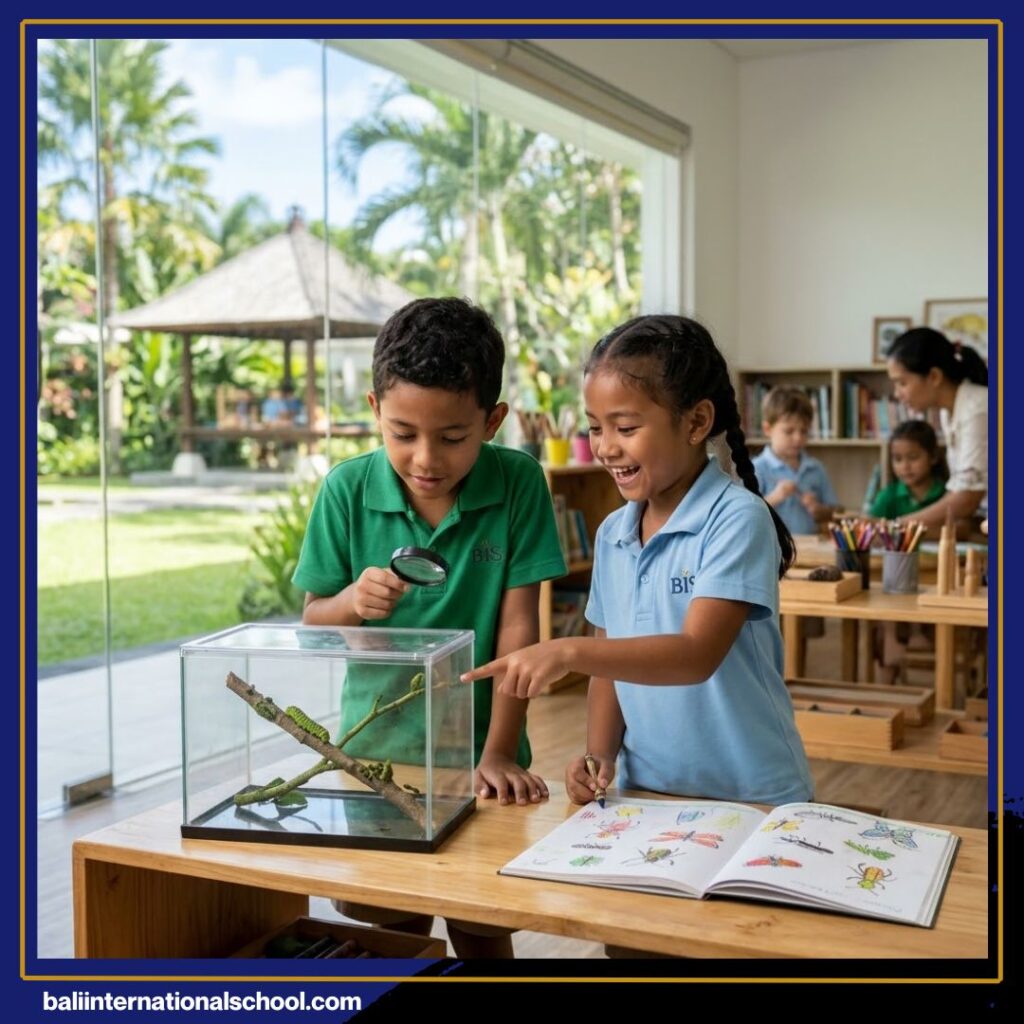
Curiosity often motivates children to explore topics beyond what they are explicitly asked to learn. Inquiry-based learning uses this natural interest by encouraging students to develop questions, investigate possibilities, and discover connections between ideas. When learning begins with a meaningful question, students have a reason to participate in the process.
Consider a classroom exploring how communities obtain clean water. Students might investigate where water comes from, how it is treated, and why access to safe water matters. Their questions can lead to further discussions about science, geography, technology, and environmental responsibility.
This approach can also help students recognise that learning continues beyond a particular assignment or examination. They may begin researching topics independently, reading more widely, or connecting classroom concepts with experiences outside school. Although curiosity develops differently in every child, an environment that welcomes thoughtful questions can help nurture it.
Ways teachers can encourage curiosity include:
- Beginning lessons with open-ended questions.
- Providing opportunities to explore different resources.
- Encouraging students to investigate their own interests.
3. It Builds Independence and Responsibility
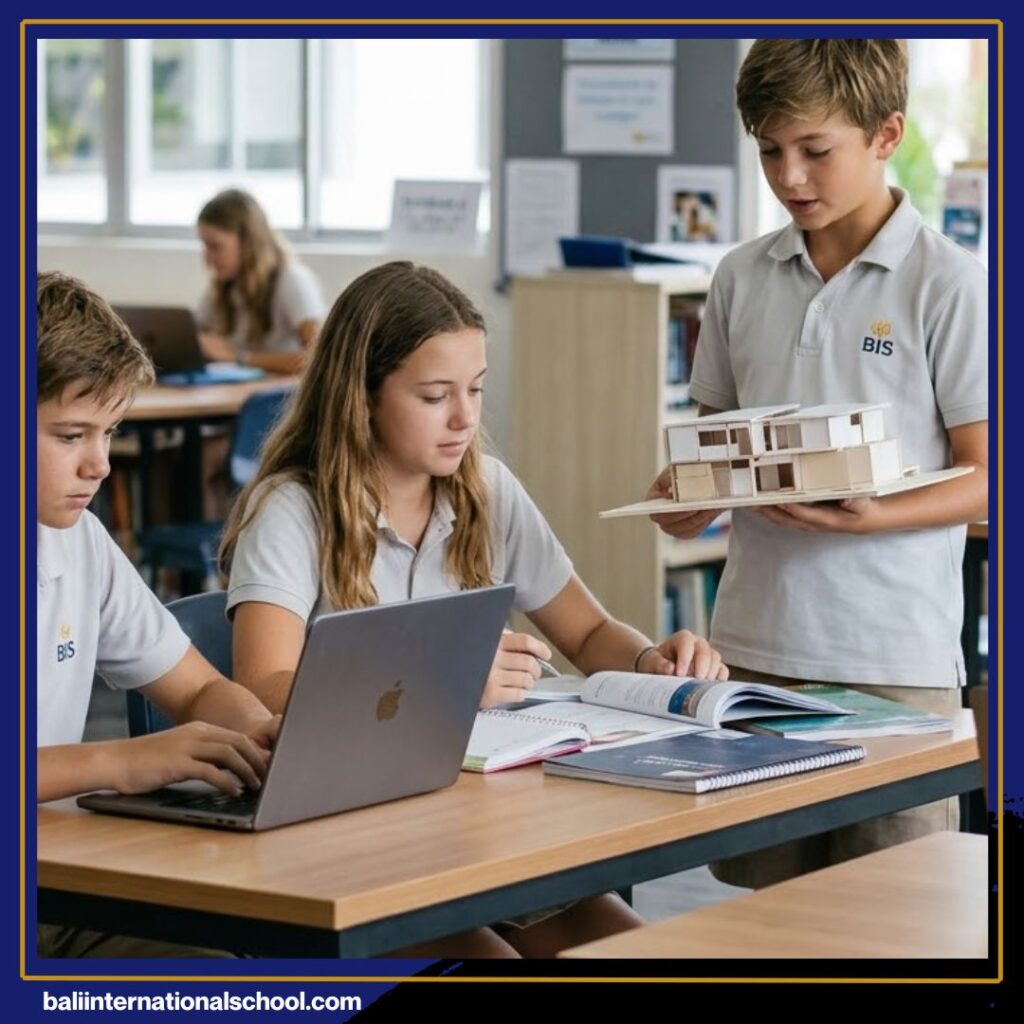
Children gradually develop independence when they learn to manage tasks, make decisions, and recognise what they need to do next. Inquiry-based learning provides opportunities to practise these abilities through research assignments, investigations, and projects that require planning. Teachers guide the process while encouraging students to take increasing responsibility for their work.
For instance, a student researching local biodiversity may need to identify reliable sources, organise observations, and decide how to present the findings. The teacher can establish clear expectations and provide feedback without making every decision on the student’s behalf. Through repeated practice, learners can become more confident in managing their responsibilities.
Independence does not mean students must solve every problem alone. Asking for assistance, responding to feedback, and collaborating with classmates are also important parts of responsible learning. The goal is to help students recognise when to act independently and when support can improve their understanding.
Students can develop independence by learning to:
- Plan research and organise information.
- Monitor progress toward a learning goal.
- Reflect on feedback and identify areas for improvement.
4. It Strengthens Communication and Collaboration
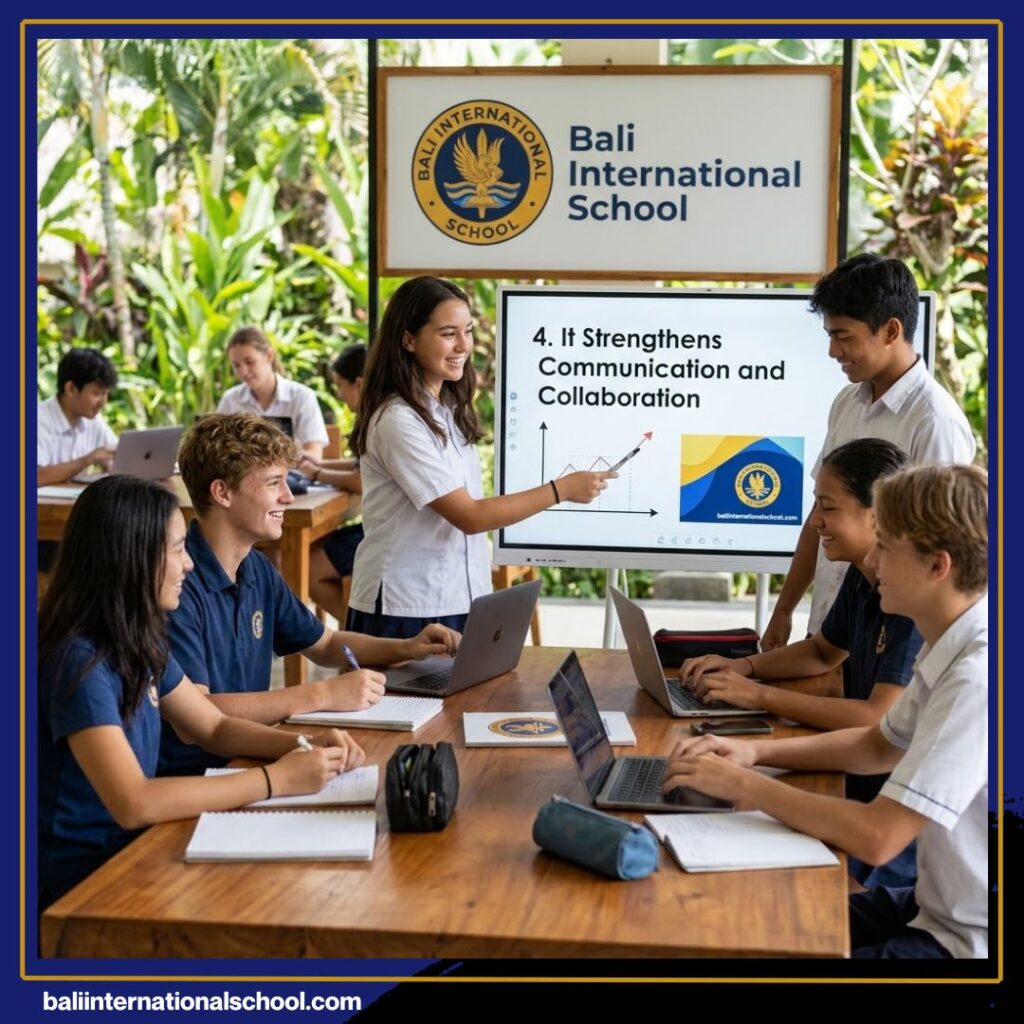
Many important challenges require people to exchange ideas, listen carefully, and work toward a shared outcome. Inquiry-based learning can create opportunities for students to practise these skills through group investigations and classroom discussions. They learn that explaining an idea clearly is just as important as developing the idea itself.
During a collaborative project, students might investigate an environmental issue and prepare recommendations for reducing waste at school. Each student can contribute observations, evaluate suggestions, and help develop a presentation that reflects the group’s findings. They also have opportunities to practise respectful disagreement and understand perspectives different from their own.
These experiences can help children develop communication habits that are useful in further education and professional settings. They learn to explain their reasoning, respond to questions, and recognise the contributions of others. Effective collaboration also teaches students that productive teamwork involves listening and shared responsibility rather than simply dividing tasks.
Collaborative learning can help students practise:
- Expressing ideas clearly and respectfully.
- Listening to different perspectives.
- Sharing responsibilities and resolving disagreements constructively.
5. It Connects Classroom Knowledge With Real-World Problems
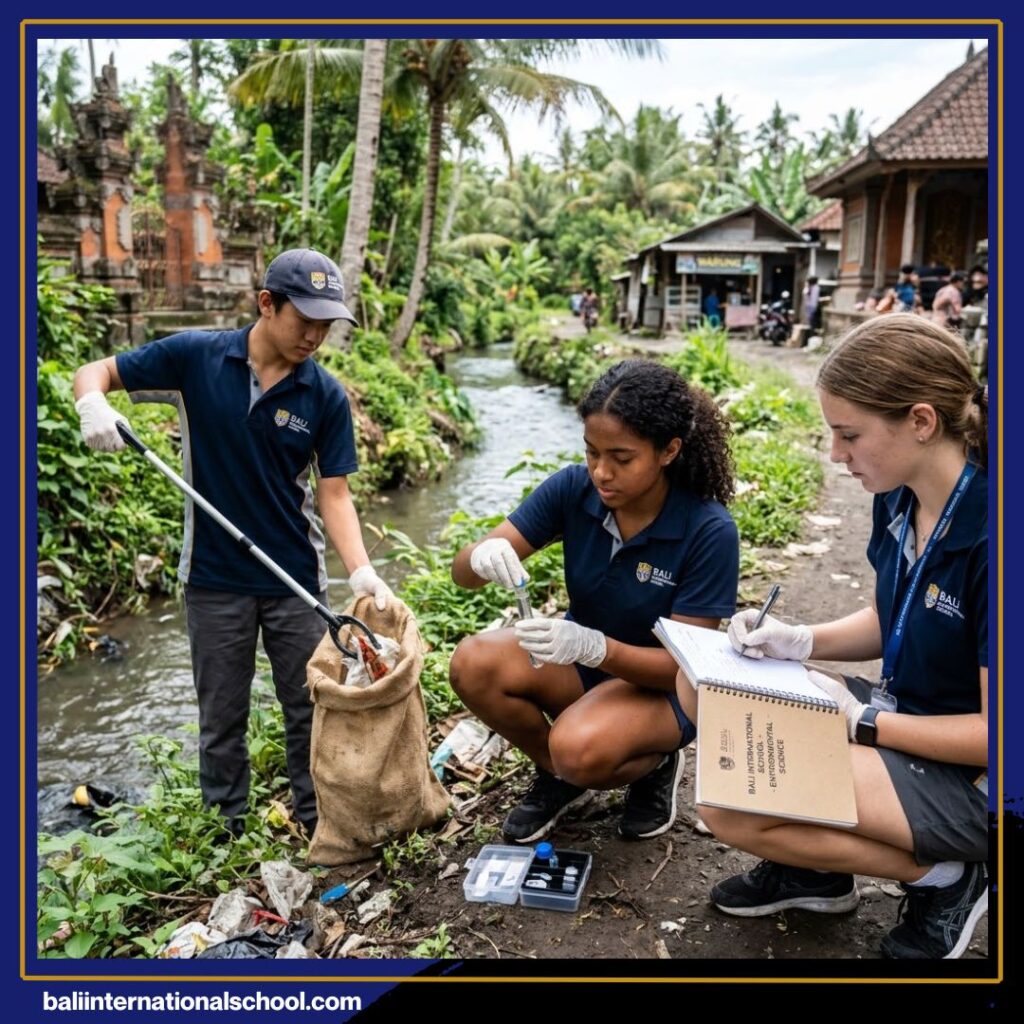
Knowledge becomes easier to apply when students understand how it relates to situations beyond a textbook. Inquiry-based learning can connect academic concepts with practical questions, helping learners explore why particular ideas matter. This makes it possible to investigate several subjects through a single meaningful topic.
For example, a project about reducing plastic waste could involve science, mathematics, language, and social studies. Students might examine different materials, calculate the amount of waste produced, interview community members, and present possible solutions. Each activity develops subject knowledge while helping students understand the broader issue.
At Bali Island School, the IB approach includes learning experiences connected to local and global issues. The school’s educational programmes also emphasise community engagement and learning beyond the classroom, providing opportunities for students to explore connections between their education and the world around them.
Real-world inquiry projects may involve:
- Investigating sustainability and environmental challenges.
- Exploring local culture and community needs.
- Applying mathematics and scientific concepts to practical questions.
6. It Encourages Reflection, Creativity, and Adaptability
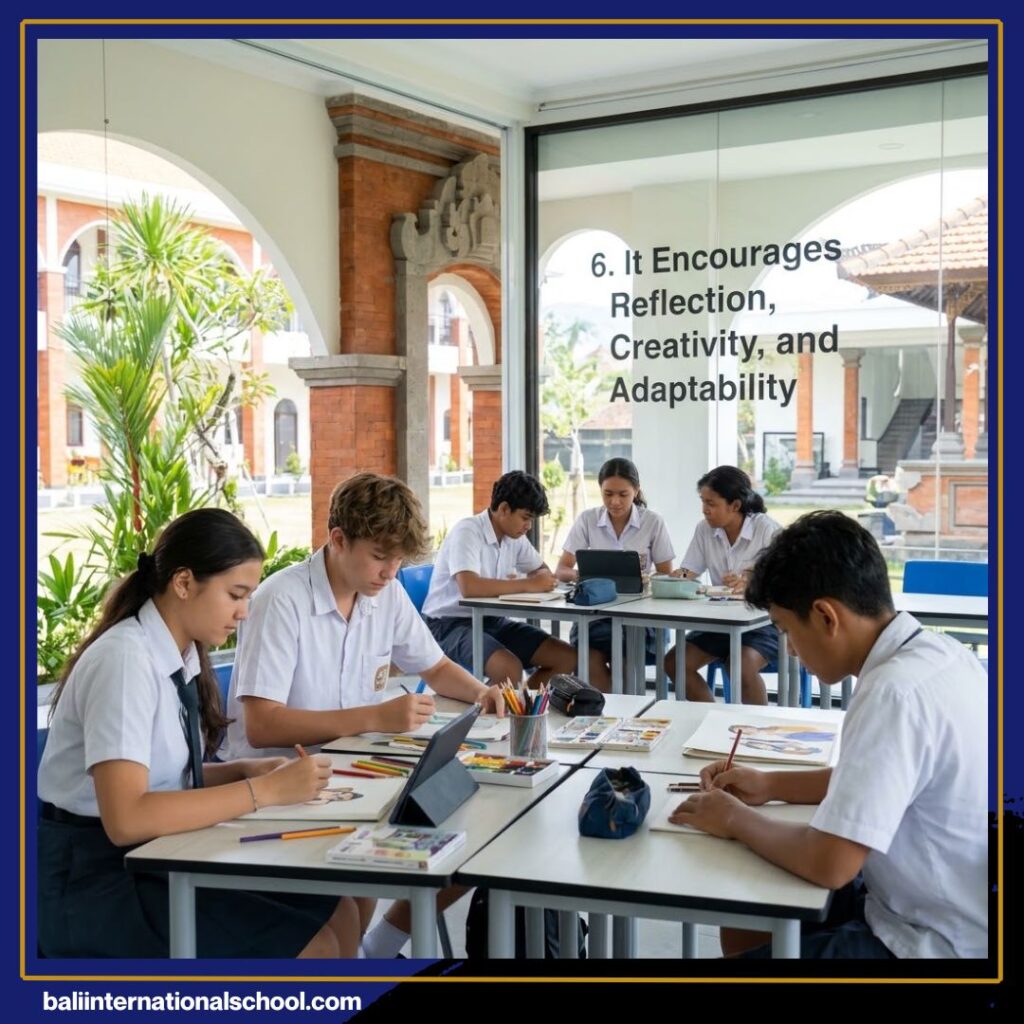
Learning does not always proceed exactly as expected, and students benefit from understanding how to respond when their first approach fails. Inquiry-based learning can help them recognise mistakes as opportunities to reconsider assumptions, test alternatives, and improve their work. Reflection allows learners to examine both the outcome and the decisions that influenced it.
Imagine students designing a structure that must support a particular weight. Their initial design might not work, prompting them to investigate the cause, reconsider the materials, and test a revised version. Through this process, they practise adapting their approach rather than abandoning the task immediately.
Reflection also encourages students to recognise their progress and identify skills they still need to develop. Combined with creative problem-solving, this habit can support a more flexible approach to unfamiliar situations. These qualities are useful in education, where challenges often become more complex as students advance through different grade levels.
Reflection can help students learn to:
- Recognise mistakes and adjust their approach.
- Generate and compare alternative solutions.
- Evaluate their progress and set new learning goals.
How Inquiry-Based Learning Works at Bali Island School
Bali Island School offers the IB Primary Years Programme (PYP), Middle Years Programme (MYP), and Diploma Programme (DP), providing an educational pathway from preschool through Grade 12. Inquiry plays an important role in the IB framework, although the activities and expectations differ according to students’ ages and programme requirements.
In the PYP, students explore concepts through guided inquiry, connecting knowledge and skills across subject areas. The programme also emphasises student agency, reflection, and responsible action, helping children understand how learning relates to their lives and communities.
As students progress into the MYP, they encounter greater academic challenges and opportunities to investigate connections between subjects and real-world contexts. In the DP, older students undertake demanding academic work that includes independent research through the Extended Essay, alongside other programme requirements.
Families considering BIS should explore how inquiry is implemented at each stage and ask how teachers assess student understanding. This can provide a clearer picture of how the school’s approach aligns with a child’s learning preferences and educational goals.
Is Inquiry-Based Learning Suitable for Every Child?
Inquiry-based learning can benefit many students, but effective implementation requires thoughtful teaching and appropriate guidance. Some children may initially prefer clear instructions and structured explanations, especially when exploring unfamiliar subjects. Teachers can support these learners by providing scaffolding, introducing essential knowledge, and gradually increasing the complexity of investigations.
Parents should also understand that inquiry does not eliminate academic expectations or the need for practice. Students still need to develop literacy, numeracy, subject knowledge, and other foundational skills. Inquiry gives them opportunities to apply these abilities while learning how to investigate questions and explain their understanding.
When evaluating a school, ask how teachers balance independent exploration with explicit instruction, feedback, and assessment. The most useful approach is one that helps students develop secure subject knowledge while giving them meaningful opportunities to think, investigate, and grow.
Help Your Child Discover the Power of Asking Questions
The benefits of inquiry based learning extend beyond completing classroom assignments. By encouraging critical thinking, curiosity, independence, collaboration, and reflection, this approach can help children develop a stronger understanding of how learning works and how knowledge can be applied.
If you are exploring an international education for your child, discover how Bali Island School integrates inquiry into its IB programmes and wider learning community. Visit the official Bali Island School website to explore its academic pathways, student activities, and educational philosophy.
Contact Bali Island School
Bali Island School
Jalan Danau Buyan IV No. 15
Sanur, Denpasar, Bali 80228
Indonesia
- General enquiries: [email protected]
- Admissions: [email protected]
- Telephone: +62 361 288770
Arrange a school visit or contact the admissions team to discuss your child’s educational needs. A conversation with the school can help you understand whether its inquiry-based approach is the right fit for your family’s aspirations.